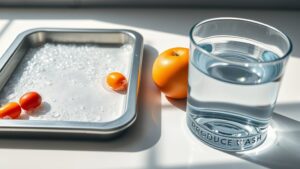
Commercial Produce Washes vs Water: What to Consider
Freshly rinsing greens with water is common, but commercial produce washes may reduce microbes only under strict directions—could you be missing key steps?

Freshly rinsing greens with water is common, but commercial produce washes may reduce microbes only under strict directions—could you be missing key steps?

Having heard soap helps clean, you may miss that residues can linger and rinsing won’t always remove them, so why risk it?

I**f baking soda can reduce produce bacteria and some pesticide residues, why do studies disagree—and what’s the safest way to wash anyway?
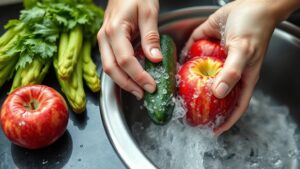
Why Scrubbing Time Matters on Firm Produce is because the right minutes remove hidden pathogens without damaging surfaces—so there’s a safer sweet spot to learn.

K**now how running water loosens weak particles with shear stress and turbulence—yet the right flow conditions decide whether contaminants leave or resettle.

Just rinsing with cold water helps prevent recontamination and slows microbial growth, but warm water’s tradeoffs may surprise you—keep reading.
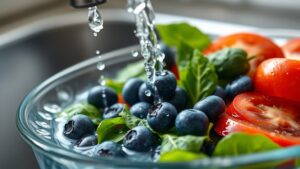
Best water temperature for washing produce depends on the item—cool for berries and leafy greens, lukewarm for apples and pears—to help prevent quality loss.
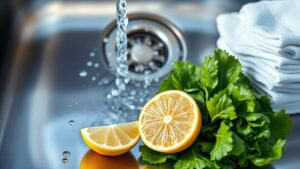
H**ow to reduce surface residue before eating produce—rinse gently, brush rough skins, swish leafy greens, and dry well to prevent lingering contamination.
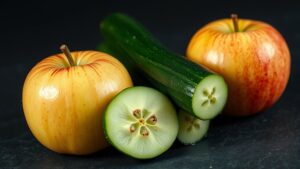
Peel back the clues—spot wax coatings on fruits and vegetables with telltale shine and water-beading tests, then discover the safest next steps.

Just rinse fresh parsley, cilantro, and basil under cool water to remove grit gently, but there’s a smart drying trick to keep them flavorful longer.