
Coincidentally, the same day you realize your kitchen needs a true pro-level reset, your sanitizer choice becomes critical. You’ll want coverage that cuts grease fast, disinfects reliably, and stays compatible with food-contact surfaces. That’s why 2027’s top picks span bleach-free options, hypochlorous acid formulas, and even test strips that confirm strength. Keep going, because the differences in contact time, safety, and verification will shape what works best for you.
Great Points
- Prioritize EPA-registered sanitizers formulated for food-contact surfaces to meet safety and compliance needs.
- Match dwell time to targeted pathogens; look for fast action (e.g., 30 seconds to 2 minutes) against common kitchen germs.
- Choose based on active ingredient type—quats, hypochlorous acid, or bleach-free options—to balance speed, residue, and compatibility.
- Verify no-rinse requirements for food prep workflows; many products are designed for quick use without rinsing.
- Use testing tools (like QAC test strips) to verify sanitizer strength and maintain consistent performance in sanitizing buckets.
| CloroxPro EcoClean Disinfecting Cleaner Spray Bottle 32 fl. oz. | 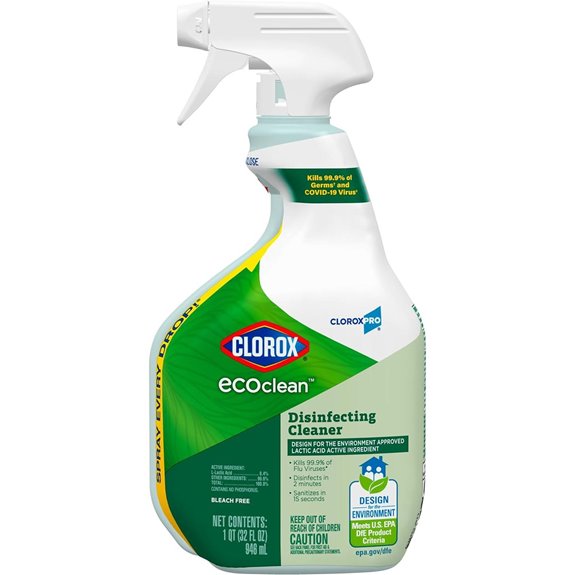 | Best Natural Disinfectant | Sanitizer type: Disinfecting cleaner spray (natural-origin active) | Food-safety / food-contact use: Yes (foodservice kitchen environments mentioned) | EPA-registered / regulatory-validated: Certified by Design for the Environment (DfE) / disinfecting claims | VIEW LATEST PRICE | Read Our Analysis |
| FryOilSaver Quat Sanitizer Test Strips for Sanitizing Solution 100 Pack | 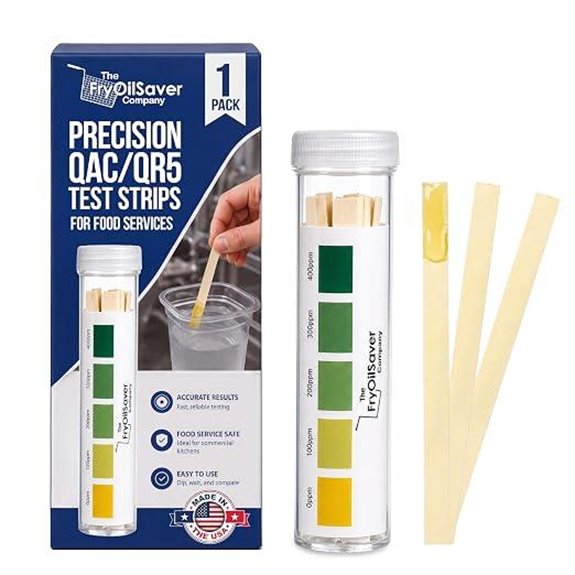 | Best Quat Testing Kit | Sanitizer type: Quat sanitizer test strips | Food-safety / food-contact use: Yes (food contact surfaces, wiping cloth stations) | EPA-registered / regulatory-validated: Not EPA sanitizer listing (test kit for quat sanitizer) | VIEW LATEST PRICE | Read Our Analysis |
| Lysol All Purpose Kitchen Cleaner Spray For Grease & Grime Citrus 22 oz | 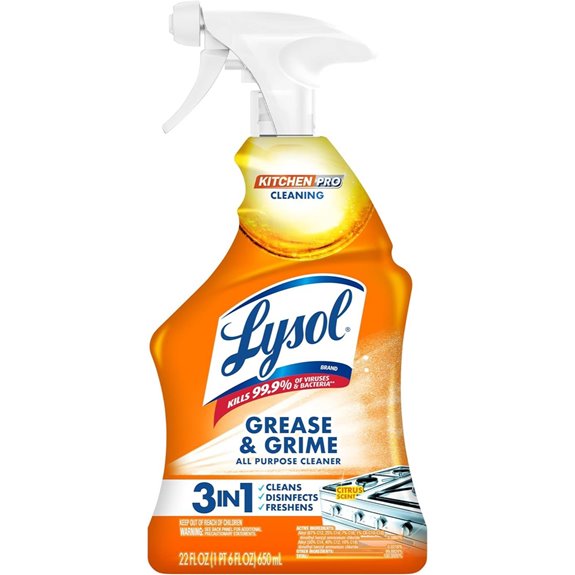 | Best for Grease & Grime | Sanitizer type: Disinfecting all-purpose kitchen cleaner spray | Food-safety / food-contact use: Yes (safe on food-contact areas; rinse food-contact) | EPA-registered / regulatory-validated: EPA Registered (#777-91) | VIEW LATEST PRICE | Read Our Analysis |
| Lysol All Purpose Cleaner Spray Disinfectant Mango 32oz | 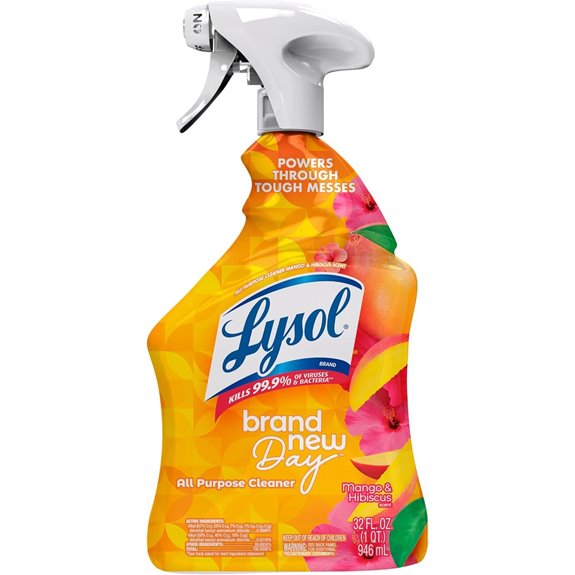 | Best All-Purpose Disinfectant | Sanitizer type: Disinfecting all-purpose cleaner spray | Food-safety / food-contact use: Yes (safe on household kitchen surfaces; food-contact surfaces noted for general use) | EPA-registered / regulatory-validated: EPA-registered disinfectant spray (kills 99.9%) | VIEW LATEST PRICE | Read Our Analysis |
| BRIOTECH Sanitizer Disinfectant Hypochlorous Acid Refill 1 Gal | 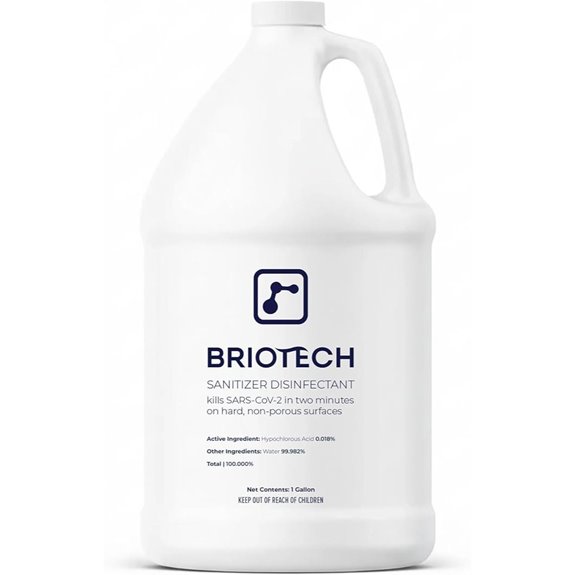 | Best Hypochlorous Option | Sanitizer type: Hypochlorous acid sanitizer disinfectant (refill) | Food-safety / food-contact use: Yes (designed for food-contact surfaces; food kitchens) | EPA-registered / regulatory-validated: EPA-registered (uses listed) | VIEW LATEST PRICE | Read Our Analysis |
| Ecolab Oasis 146 Multi-Quat Sanitizer Cleaner 1 Gallon | 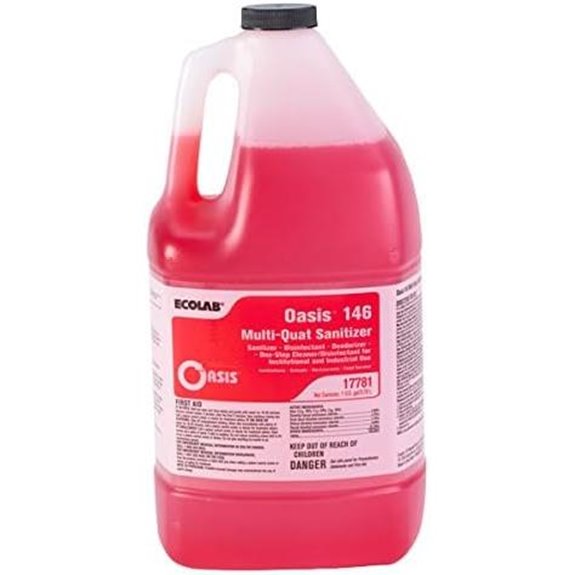 | Best Multi-Quat Concentrate | Sanitizer type: Multi-quat sanitizer cleaner | Food-safety / food-contact use: Yes (sanitizer for foodservice applications; no-rinse) | EPA-registered / regulatory-validated: EPA-registered concentrated formula | VIEW LATEST PRICE | Read Our Analysis |
| LEXX® Food Contact Surface Sanitizer & Cleaner Spray EPA Registered 32 oz | 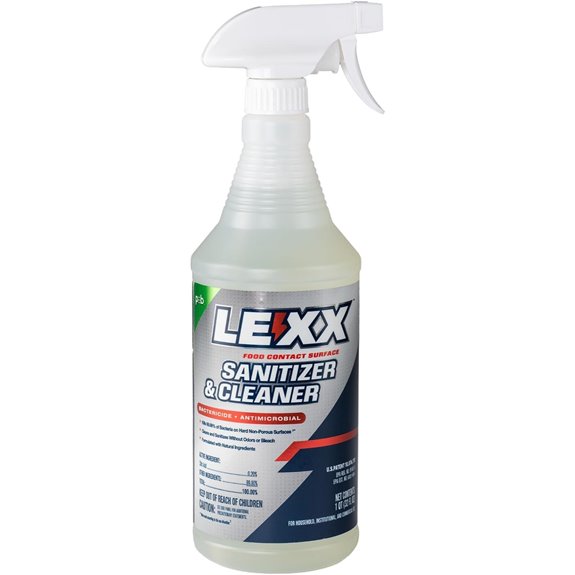 | Best for Food Contact | Sanitizer type: Food contact surface sanitizer & cleaner spray | Food-safety / food-contact use: Yes (specifically for food-contact surfaces) | EPA-registered / regulatory-validated: EPA registered | VIEW LATEST PRICE | Read Our Analysis |
| Steramine 1 Bottle Sanitizer Tablets w/15x QT-10 Test Strips 150-Count | 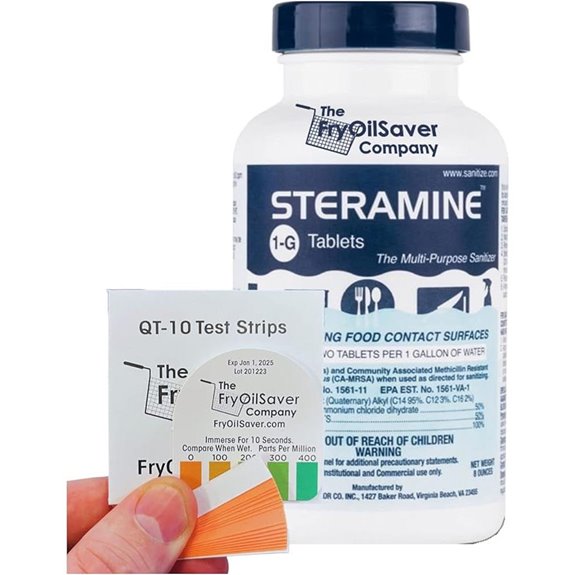 | Best Tablet Concentrate | Sanitizer type: Sanitizer tablets (with test strips) | Food-safety / food-contact use: Yes (food contact surfaces/equipment) | EPA-registered / regulatory-validated: Designed for compliance with health department standards (sanitizer tablets) | VIEW LATEST PRICE | Read Our Analysis |
| Member’s Mark Commercial Sanitizer (128 Ounce) (2 Pack) |  | Best Value 2-Pack | Sanitizer type: Liquid commercial sanitizer (bleach-free) | Food-safety / food-contact use: Yes (approved for food contact surfaces) | EPA-registered / regulatory-validated: EPA Registration approved for food contact surfaces | VIEW LATEST PRICE | Read Our Analysis |
| Purell Foodservice Surface Sanitizer Spray Bottle 6ct x 32 fl oz – 3341-06 | 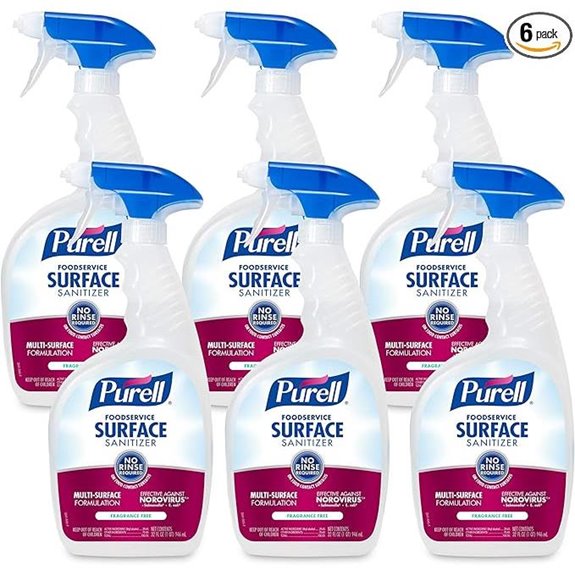 | Best Odor-Free Pick | Sanitizer type: Foodservice surface sanitizer spray bottle | Food-safety / food-contact use: Yes (sanitizer for food-contact surfaces without rinsing) | EPA-registered / regulatory-validated: EPA certification (DfE) | VIEW LATEST PRICE | Read Our Analysis |
More Details on Our Top Picks
CloroxPro EcoClean Disinfecting Cleaner Spray Bottle 32 fl. oz.
CloroxPro EcoClean Disinfecting Cleaner Spray Bottle makes it easy to keep your kitchen sanitized. You spray it on hard, nonporous surfaces and it works fast—disinfecting in 30 seconds. It kills 99.9% of flu viruses and norovirus, and it’s effective against SARS-CoV-2 too. You get a clean, fresh scent without harsh additives: it’s free from bleach, alcohol, phosphates, quats, and colorants. Because it uses a natural origin active ingredient, you can use it every day without gloves or mixing. Use it anywhere in your commercial-grade cleaning routine.
- Sanitizer type:Disinfecting cleaner spray (natural-origin active)
- Food-safety / food-contact use:Yes (foodservice kitchen environments mentioned)
- EPA-registered / regulatory-validated:Certified by Design for the Environment (DfE) / disinfecting claims
- No-rinse option:No gloves or mixing required (spray use; disinfecting)
- Hard, nonporous surface efficacy:Disinfects hard, nonporous surfaces
- Quaternary / quat-related capability (direct or verification):Not specified (natural-origin active; no quat mention)
- Additional Feature:Natural origin active ingredient
- Additional Feature:Certified by Design for the Environment
- Additional Feature:Clean, fresh scent
FryOilSaver Quat Sanitizer Test Strips for Sanitizing Solution 100 Pack
FryOilSaver Quat Sanitizer Test Strips make fast, reliable quat checks part of your routine. You dip a strip for 1 second, wait 5–10 seconds, and compare the color to the chart. It reads quaternary ammonium (QAC) sanitizer strength from 0–500 ppm, with clear steps at 0, 150, 200, 400, and 500 ppm. Use these strips for sanitizer buckets, sink compartments, wiping cloth stations, and food-contact surfaces. They’re designed for QAC, not chlorine or water testing. Each vial holds 100 strips, stored in a tight-sealing cap to stay clean and dry.
- Sanitizer type:Quat sanitizer test strips
- Food-safety / food-contact use:Yes (food contact surfaces, wiping cloth stations)
- EPA-registered / regulatory-validated:Not EPA sanitizer listing (test kit for quat sanitizer)
- No-rinse option:Not applicable (testing strips)
- Hard, nonporous surface efficacy:Not applicable (solution testing)
- Quaternary / quat-related capability (direct or verification):Yes (quat sanitizer test strips for QAC QR5)
- Additional Feature:Fast dip & read timing
- Additional Feature:0–500 ppm QAC range
- Additional Feature:Color chart ppm steps
Lysol All Purpose Kitchen Cleaner Spray For Grease & Grime Citrus 22 oz
When your kitchen needs quick, reliable cleaning, Lysol All Purpose Kitchen Cleaner Spray tackles grease & grime with a fresh citrus finish. You spray, wipe, and cut through tough, baked-on messes. Use it as directed and you’ll eliminate 99.9% of kitchen viruses and bacteria, including Salmonella and E. coli (EPA Registration #777-91). You can clean countertops, tables, oven exteriors, highchairs, and kitchen appliances with no harsh chemical residue left behind. Just rinse any food contact surfaces with potable water after use. For more options, explore other Lysol disinfecting sprays and wipes.
- Sanitizer type:Disinfecting all-purpose kitchen cleaner spray
- Food-safety / food-contact use:Yes (safe on food-contact areas; rinse food-contact)
- EPA-registered / regulatory-validated:EPA Registered (#777-91)
- No-rinse option:Rinse food contact surfaces with potable water after use
- Hard, nonporous surface efficacy:Disinfects kitchen viruses/bacteria (surfaces as directed)
- Quaternary / quat-related capability (direct or verification):Not specified (no quat mention)
- Additional Feature:Cuts baked-on grease
- Additional Feature:Tested 99.9% kitchen germs
- Additional Feature:EPA Registration #777-91
Lysol All Purpose Cleaner Spray Disinfectant Mango 32oz
If you want a quick, mango-scented solution, Lysol All Purpose Cleaner Spray is a solid pick. You can disinfect and clean in one step on hard, non-porous surfaces like counters, sinks, stovetops, cabinets, appliance exteriors, high chairs, bathtubs, and showers. It kills 99.9% of viruses and bacteria, including COVID-19, and it targets tough germs like MRSA and Salmonella. You’ll get fast results too—spray for as little as 10 seconds to 2 minutes. It cuts through grease and soap scum without bleach, leaving a tropical mango and hibiscus fragrance.
- Sanitizer type:Disinfecting all-purpose cleaner spray
- Food-safety / food-contact use:Yes (safe on household kitchen surfaces; food-contact surfaces noted for general use)
- EPA-registered / regulatory-validated:EPA-registered disinfectant spray (kills 99.9%)
- No-rinse option:No% bleach; disinfectant spray (general use; no-rinse not explicitly stated)
- Hard, nonporous surface efficacy:Effective on hard, non-porous surfaces
- Quaternary / quat-related capability (direct or verification):Not specified (no quat mention)
- Additional Feature:0% bleach formula
- Additional Feature:Kills in 10 seconds–2 minutes
- Additional Feature:Tropical mango & hibiscus fragrance
BRIOTECH Sanitizer Disinfectant Hypochlorous Acid Refill 1 Gal
A 1-gallon refill keeps your kitchen stocked with a hypochlorous-acid sanitizer that works where food meets surfaces. You spray it on hard, non-porous areas and it kills SARS-CoV-2 in 2 minutes, plus 99.99% of harmful bacteria like Salmonella, E. coli, MRSA, and Listeria. You also use it against viruses such as feline calicivirus and SARS-CoV-2. It’s made from salt, water, and electricity—no harsh chemicals, no added fragrances, and no overwhelming fumes. You get a food-safe, no-rinse formula for counters, phones, toys, glass, and pet bowls.
- Sanitizer type:Hypochlorous acid sanitizer disinfectant (refill)
- Food-safety / food-contact use:Yes (designed for food-contact surfaces; food kitchens)
- EPA-registered / regulatory-validated:EPA-registered (uses listed)
- No-rinse option:No-rinse formula
- Hard, nonporous surface efficacy:Kills on hard, non-porous surfaces
- Quaternary / quat-related capability (direct or verification):Not specified (hypochlorous acid)
- Additional Feature:Made from salt, water, electricity
- Additional Feature:Food-safe, no-rinse formula
- Additional Feature:No added fragrances
Ecolab Oasis 146 Multi-Quat Sanitizer Cleaner 1 Gallon
Ecolab Oasis 146 Multi-Quat Sanitizer Cleaner brings a best multi-quat concentrate that simplifies kitchen hygiene without extra rinsing. You get one EPA-registered, concentrated 1-gallon bottle that you dilute between 0.25–0.67 oz per gallon of water. Use it your way: spray and wipe, a mop bucket application, or as a third-sink sanitizer. It deodorizes garbage storage areas, garbage bins, and even toilet bowls, helping control odor on hard, nonporous surfaces. You’ll also stay compliant and get dependable sanitation in busy environments.
- Sanitizer type:Multi-quat sanitizer cleaner
- Food-safety / food-contact use:Yes (sanitizer for foodservice applications; no-rinse)
- EPA-registered / regulatory-validated:EPA-registered concentrated formula
- No-rinse option:No rinse required
- Hard, nonporous surface efficacy:Suitable for hard nonporous surfaces
- Quaternary / quat-related capability (direct or verification):Yes (Multi-Quat sanitizer cleaner)
- Additional Feature:EPA-registered concentrated formula
- Additional Feature:Deodorizes odor-causing areas
- Additional Feature:Spray/wipe or mop-bucket use
LEXX® Food Contact Surface Sanitizer & Cleaner Spray EPA Registered 32 oz
LEXX® delivers an EPA-registered, no-rinse sanitizer you can trust on food contact surfaces. You spray it on hard, non-porous areas and kill 99.999% of harmful bacteria like E. coli, Salmonella, Listeria, and Staph aureus in just one minute. The pre-mixed 32 fl oz bottle saves you time—no dilution or measuring. It’s NSF-listed Category A1, D2, uses citric acid, and leaves no harmful residues. You’ll also lift dirt and grease, disrupt biofilm, and help prevent milk stone buildup. It’s unscented, non-corrosive, biodegradable, and safe for many foodservice and healthcare tools.
- Sanitizer type:Food contact surface sanitizer & cleaner spray
- Food-safety / food-contact use:Yes (specifically for food-contact surfaces)
- EPA-registered / regulatory-validated:EPA registered
- No-rinse option:Requires no rinsing
- Hard, nonporous surface efficacy:Designed for hard, non-porous food contact surfaces
- Quaternary / quat-related capability (direct or verification):Not specified (citric acid active)
- Additional Feature:Citric acid active ingredient
- Additional Feature:NSF-listed Category A1, D2
- Additional Feature:Prevents milk stone buildup
Steramine 1 Bottle Sanitizer Tablets w/15x QT-10 Test Strips 150-Count
If you run a busy kitchen, Steramine’s tablet concentrate makes sanitizing simple and consistent. You dissolve one tablet per gallon of water to create a ready-to-use solution, and a single bottle yields up to 150 gallons—perfect for high-traffic prep areas, bars, and catering services. These tablets help eliminate CA-MRSA, E. coli, HIV-1, Listeria monocytogenes, and Staphylococcus aureus, supporting health-department compliance on food contact surfaces. Use it for utensils, dishware, glassware, and even non-food contact items. You also get 15 QT-10 test strips to confirm proper concentration before you sanitize.
- Sanitizer type:Sanitizer tablets (with test strips)
- Food-safety / food-contact use:Yes (food contact surfaces/equipment)
- EPA-registered / regulatory-validated:Designed for compliance with health department standards (sanitizer tablets)
- No-rinse option:Sanitizer solution preparation (typically rinse not specified in summary)
- Hard, nonporous surface efficacy:Sanitizes utensils/equipment and food contact surfaces
- Quaternary / quat-related capability (direct or verification):Not specified (tablet sanitizer; test strips included)
- Additional Feature:One tablet per gallon
- Additional Feature:Yields up to 150 gallons
- Additional Feature:Includes QT-10 test strips
Member’s Mark Commercial Sanitizer (128 Ounce) (2 Pack)
Member’s Mark Commercial Sanitizer delivers a bleach-free, unscented concentrate in a value 2-pack. You get 128 fluid ounces per bottle, and you mix it to make up to 128 gallons of sanitizer. It kills 99.99% of foodservice germs, so you can confidently sanitize high-touch areas. The formula is EPA-registered and approved for use on food contact surfaces, which makes it ideal for tableware and bathroom surfaces. You’ll like the concentrated design because it stretches your supply while keeping results consistent. Model 42939.
- Sanitizer type:Liquid commercial sanitizer (bleach-free)
- Food-safety / food-contact use:Yes (approved for food contact surfaces)
- EPA-registered / regulatory-validated:EPA Registration approved for food contact surfaces
- No-rinse option:Approved for food contact surfaces (no specific rinse stated)
- Hard, nonporous surface efficacy:Suitable for foodservice germs (food contact surfaces)
- Quaternary / quat-related capability (direct or verification):Not specified (bleach-free liquid sanitizer)
- Additional Feature:Bleach-free sanitizer
- Additional Feature:Makes 128 gallons sanitizer
- Additional Feature:Unscented formula
Purell Foodservice Surface Sanitizer Spray Bottle 6ct x 32 fl oz – 3341-06
This Purell 6-pack, 32 fl oz foodservice spray is the best odor-free pick for busy kitchens. You get a patented fragrance-free formula that’s gentle on surfaces, even a child’s highchair. It delivers a 99.9% kill rate of viruses and bacteria, including norovirus, E. coli, and salmonella in 30 seconds, plus COVID-19 in 10 seconds. You can spray most hard and soft surfaces, including food-contact areas, without rinsing. You also don’t need hand washing after application. With no harsh chemicals, no precautionary statements, and EPA Design for the Environment certification, you clean confidently.
- Sanitizer type:Foodservice surface sanitizer spray bottle
- Food-safety / food-contact use:Yes (sanitizer for food-contact surfaces without rinsing)
- EPA-registered / regulatory-validated:EPA certification (DfE)
- No-rinse option:Food-contact surfaces without rinsing
- Hard, nonporous surface efficacy:Effective on most hard and soft surfaces (including food-contact)
- Quaternary / quat-related capability (direct or verification):Not specified (patented formula; no quat mention)
- Additional Feature:Patented fragrance-free formula
- Additional Feature:Design for the Environment (DfE)
- Additional Feature:No precautionary statements
Factors to Consider When Choosing Kitchen Sanitizer**
When you choose a kitchen sanitizer, start by checking EPA registration and the product’s standards so you know it’s approved for use. Next, look at the active ingredient type, confirm it’s safe for food contact surfaces, and follow any no-rinse or rinse requirements. Finally, match the dwell time for the target pathogens to guarantee it actually disinfects before you wipe or rinse.
EPA Registration And Standards
Before you buy a kitchen sanitizer, check for EPA registration, because it signals that the product meets strict safety and performance standards for use on food-contact surfaces. You want EPA-approved effectiveness: the sanitizer must demonstrate it can kill specific pathogens, like E. coli and Salmonella, within a defined contact time. The EPA also evaluates active ingredients for human health and environmental safety, and it requires disclosure of all formulation components. That matters because EPA compliance helps guarantee strong microbial control across different microorganisms while minimizing harmful residues left behind. Finally, keep in mind that EPA standards get updated as new research emerges, so current approvals reflect today’s public health expectations.
Active Ingredient Type
Active ingredient type drives how well a kitchen sanitizer performs on food-contact surfaces, including how fast it works, what it targets, and what residues might remain. If you want broad-kill speed, look at hypochlorous acid—it tackles viruses and bacteria in minutes. For quick, convenient disinfection, quaternary ammonium compounds (quats) are common in food service and work fast while staying equipment-friendly. If you prefer gentler, everyday options, choose plant-based or natural-origin actives, especially those certified by environmental standards, so you avoid harsh chemical feel. For a low-tox, food-surface-friendly approach, citric acid can help suppress harmful bacteria. Finally, match contact time to the label—some act in seconds, others need minutes for full germ reduction.
Food Contact Surface Safety
Food-contact surface safety starts with picking a sanitizer made specifically for use on areas like cutting boards, counters, and utensils. You’ll want products that are formulated to eliminate harmful bacteria while avoiding dangerous residues on surfaces that touch food. Next, check for EPA registration and real efficacy testing against common pathogens such as E. coli, Salmonella, and Listeria—this helps you trust results in your food prep area. You should also choose a sanitizer proven to act fast on bacteria and viruses, sometimes in as little as 10–30 seconds. Finally, look for formulations that avoid harsh chemicals, since harsh ingredients can increase health risks and undermine food safety.
No-Rinse Or Rinse Requirements
When you choose a kitchen sanitizer, you need to match the product’s rinse requirements to your workflow and your food-safety rules. First, decide between no-rinse and rinse-required formats. No-rinse sanitizers are designed for food-contact surfaces without extra cleaning after application, so you can move faster. If you pick no-rinse options like hypochlorous acid or citric acid, you often get effective kill action while leaving no harmful residues. Next, be careful with rinse-required sanitizers, because they often need potable-water rinsing to remove chemical residue that could affect food safety. For compliance, many food-prep and food-serving environments favor no-rinse products. This choice can streamline cleaning and reduce chemical contamination risk.
Dwell Time For Pathogens
Dwell time tells you how long the sanitizer must stay on a surface to effectively kill pathogens, and it can range from about 10 seconds to as long as 2 minutes depending on the product. You need to match that wet-time to the specific germs you’re targeting, because susceptibility varies: for example, Norovirus may require around 30 seconds, while some bacteria demand up to 2 minutes. Check the label—manufacturers base dwell-time guidance on lab testing—so you know exactly how long the surface must remain wet. If you wipe too soon or let it dry early, you risk ineffective sanitization and surviving microorganisms, which can lead to foodborne illness. Choose products with clear dwell-time instructions and follow health regulations.
Compatibility With Hard Surfaces
Before you buy a kitchen sanitizer, check that it’s compatible with hard, non-porous surfaces like countertops, sinks, and appliance exteriors. You’ll get the best germ elimination when the formula is specifically effective on these areas, not on porous materials that can trap grime. Read the label and confirm it states compatibility with the surfaces you clean most. That helps prevent damage, streaking, or incomplete sanitation. Choose products that claim fast action on hard surfaces—often targeting 99.9% of viruses and bacteria within about 10 seconds to 2 minutes—so you don’t waste time between tasks. Also look for options that leave no harsh chemical residues for food-contact zones, and prioritize EPA-registered sanitizers.
Test Strips And Dilution
How do you know your sanitizer is strong enough to work? Use test strips every time you mix or change batches. They confirm your solution stays within the effective concentration range, which matters for fighting pathogens like E. coli and Salmonella. Many strips for quaternary ammonium compounds (QAC) give fast results: dip, wait 5–10 seconds, then match the color to the chart. Don’t assume one dilution fits all—ratios vary widely, from as low as 0.25 ounces per gallon to higher mixes needed for full efficacy. For compliance, keep monitoring regularly, not just at setup. Also store strips properly: keep them in a tight-sealing vial, dry and clean, so you avoid inaccurate readings.
Common Questions
How Long Should Kitchen Surfaces Remain Wet for Effective Sanitizing?
You should keep kitchen surfaces wet for the full contact time listed on your sanitizer label, typically about 1–10 minutes. After cleaning, apply the sanitizer so the surface stays visibly wet—don’t let it dry early. If it dries, reapply until you hit the required time. Then air-dry unless the label says to rinse. Always follow the product’s directions for floors, counters, and food-contact areas.
Are Quaternary Ammonium Sanitizers Compatible With Food-Contact Surfaces?
Yes, quaternary ammonium (quats) sanitizers can be compatible with food-contact surfaces when you use an EPA-registered quat product and follow the label directions. You’ll apply the sanitizer at the correct concentration and contact time, then you’ll let it air-dry as instructed. Don’t rinse unless the label says to. Always use clean, properly pre-rinsed surfaces first, and keep surfaces from drying too soon.
Can Hypochlorous Acid and Bleach Be Used Together Safely?
No, you shouldn’t use hypochlorous acid and bleach together. Mixing them can create harmful byproducts, weaken sanitizer effectiveness, and increase irritation risk. If you use bleach, rinse surfaces thoroughly, then wait until the area fully dries before applying hypochlorous acid (or vice versa). Always follow the product labels for dilution, contact time, and food-surface rinsing. If you’re unsure, stick to one sanitizer and schedule separate clean cycles.
How Often Should Sanitizer Concentration Be Tested Using Test Strips?
Test sanitizer concentration often, like checking the tide before you wade in. You should test every time you mix a new batch, then at least every 2–4 hours during active use. If surfaces look grimy or you wipe with cloths that remove sanitizer, test sooner. Store test strips dry, read results fast, and follow label targets—consistency keeps your kitchen clean and safe.
What Safety Precautions Protect Against Fumes, Splashes, and Skin Irritation?
To protect against fumes, splashes, and skin irritation, wear nitrile gloves, safety glasses, and long sleeves, and keep the area well ventilated. Mix sanitizer carefully, using cool water first, and never combine chemicals. Add the product slowly to avoid splatter. If fumes bother you, step back and ventilate more. For spills, rinse skin with running water right away and clean surfaces with fresh water.
Overall
When you pick a kitchen sanitizer for 2027, focus on what it kills fast, how safe it is around food, and whether it’s easy to verify strength—like using FryOilSaver test strips. One standout stat: proper disinfection can reduce harmful bacteria on frequently touched surfaces by up to 99.9% when you use the right contact time. Choose a cleaner you’ll actually use correctly, and you’ll keep your space truly “pro” clean.